Tuesday, 28 June 2011

Mace2theO Webcast #24 - Three Kings


Maceo Musicology Webcast #24 - Three Kings

James Brown, Jimi Hendrix and Sly Stone

There may be only one Prince, but for me there were Three Kings - James Brown, Jimi Hendrix and Sly Stone.


http://www.allthatmusic.com/wp-content/uploads/061225_James_Brown_RIP_b.jpg
I was lucky enough to have an older sister and a friend's older brother to introduce me to their music while I was a young lad (my sister took me to my first concert - James Brown at the Civic Arena in Pittsburgh - when I was 11).  It seeped into my consciousness as I was chasing the latest Monkees and Jackson Five records.
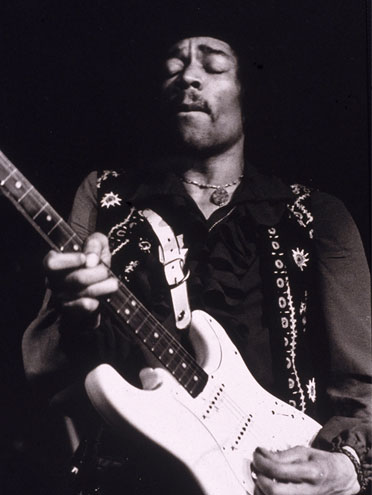


http://www.kalamu.com/bol/wp-content/content/images/jimi%20hendrix%2024.jpg

As the music of the Three Kings was of the generation before me, they ended up influencing many of the artists I ended up listening to, from George Clinton to Mothers Finest to Prince to Living Colour, and others.


http://images.wolfgangsvault.com/sly-stone/fine-art-print/memorabilia/WDS690815-17-35A-FP.jpg Given that all 3 are usually cited in most of the articles written to describe Prince, I thought I would put together this little webcast as background for those purple funkateers a bit younger than me, whose knowledge may be limited to greatest hits compilations, or casual fans of the 3 who haven't caught up on the unreleased tracks appearing on recent reissues and box sets. Enjoy


Warning: This turned out a bit funkier than I originally intended


Tracklist

1. Payback/Soul Power - James Brown (live 1974, Zaire)
2. Hear My Train A'Comin' - Jimi Hendrix (live 1967, BBC)
3. You Can Make It If You Try - Sly and The Family Stone (live 1969 Woodstock)
4. Sunny - James Brown w/ Dee Felice Trio (1969)
with Marva Whitney on co-lead vocals
5. Angel - Jimi Hendrix (home demo 1968)
6. I Remember - Sly Stone and Billy Preston (demo 1965)
7. Cold Sweat  - James Brown (False Start/Alternate Take, 1967 unreleased until 1996)
Slightly faster and a bit sloppier than the final funk-history-making version, this is notable in part as James explains the concept of "On The One" to the band
8. Freedom - Jimi Hendrix (No overdub take, 1970 unreleased until 2010)
9. Crossword Puzzle  - Sly & The Family Stone (outtake from 'Small Talk'- 1974, unreleased until 2007)
10. There Was A Time (I Got to Move) - James Brown (Alternate Take, 1970, unreleased until 1996)
Featuring Bootsy Collins on bass, with a guitar solo by Catfish Collins. That's right. A guitar solo. On a JB record. By Bootsy's brother.
11. Strato Strut - Band of Gypsys (1969 - unreleased until 2000)
Recorded during Band of Gypsys' rehearsals for the New Year's Eve 1969 shows at the Fillmore. BOG allowed Jimi to explore his funk and soul side, which allowed his ideas to flow from rhythm, rather than from lead guitar. As such, he could enjoy the grooves laid down by Billy Cox on bass and Buddy Miles on drums to find a different way to express himself.  On the instrumental "Strato Strut" he plays a bit of lead and some rhythm as the band lay down a hardcore funky groove. BOG never released a studio album
12. Crazay - Jesse Johnson and Sly Stone (1986)
13. Think (About It) - Lyn Collins (1972)
The recording was produced by Brown (who also co-wrote the song) and featured instrumental backing from The J.B.'s. Along with "Funky Drummer" and "Funky President", "Think (About It)" is one of the most frequently sampled James Brown-produced recordings, having been used on tracks by dozens of hip hop artists.
14. Hear My Freedom - Jimi Hendrix (1969 unreleased until 2010)
Part of a handful of studio outtakes where Jimi starts incorporating some additional musicians on percussion and organ. "Hear My Freedom" is a studio jam with vocals, featuring Buddy Miles and (probably) Lee Michaels on organ.
15. Que Sera Sera (Whatever Will Be, Will Be) - Sly & The Family Stone (1973)
From 'Fresh' Sly's classic cover of a song made famous by Doris Day.


Listen later here


Sunday, 5 June 2011

Mace2theO Webcast #22 - Mother's Finest


Mace2theO Webcast #22 - Mother's Finest


"They sound like Soul Train crashin' into Headbanger's Ball!"


Artist Spotlight - Mother's Finest
They are what can be called a rock-funk band with heavy overtones. Riff-heavy and soulful at the same time,they are a phenomenal stage act.  Formed in Atlanta,Georgia by vocalists Glenn Murdock and Joyce "Baby Jean" Kennedy, the original line-up was rounded out with Gary "Moses Mo" Moore on guitar, drummer B.B. Queen, Gary "Wyzard" Seay on bass and Mike Keck on keyboards.

'Discovered' by renowned hard rock producer Tom Werman (Cheap Trick, Ted Nugent, Motley Crue) who signed them to Epic Records and fronted by the amazing Joyce 'Baby Jean' Kennedy, Mother's Finest delivered in 1976 one of the eras most astounding albums. Fusing gritty funk with an explosive hard rock underbelly, the band was instantly praised as a welcome amalgam of Led Zeppelin and Sly & The Family Stone.   


They opened for the Who on their 1976 tour and got raves from the rock press. The band were guests on the German tv show Rockpalast and from that one oncert established a cult status in parts of Europe that lasts to this day. With all  this rock acclaim, their highest charting single was the ballad "Love Changes" which charted only on the R'n'B charts.(rock candy, rock roots)

 
While they had become well-known on the southern rock circuit, it wasn't until the single "Baby Love" in 1977 (a year before Prince's first album) that their sound reached most Funkateer's ears and blew us away.  Getting that album "Another Mother Further" and then discovering the previous self-titled Columbia debut released in 1976, I then heard the track "Gvie You All the Love (Inside of Me)" and I was forever sold. From there, it quickly became apparent that the combination of guitarist Moses Mo unleashing some of the heavy riffs and Baby Jean working a lyric with those soaring vocals was something different from what else was out there.  


They could rock, they could funk and they could "sang" but they were dangerous when they brought it all together. 

They remain almost criminally under-appreciated. They are one of my favourite bands.

So let me introduce you:

1.  Baby Love
2.  Mickey's Monkey
3.  I Can't Believe
4.  Love Ain't Goin' Nowhere*
5.  Give You All the Love (Inside of Me)
6.  Thank You for the Love
7.  Mr. Goodbar
8.  Funk-A-While (live
@ Villa Berg)*
9.  Don't Wanna Come Back (live @ Villa Berg)*
10. Love Changes
11. Dis Go Dis Way, Dis Go Dat Way (Maceo mix)*
12. If 6 Was 9 (with Vernon Reid)*


*If you are already a fan of MF, then you'll enjoy these tracks


Listen later here


Friday, 13 May 2011

Maceo & SeeNote – Purple TV Jams


Maceo Musicology Webcast #21

Maceo & SeeNote – Purple TV Jams

In collaboration with  Entropy MC and 2tha9s,  EMF Radio presents "Purple TV Jams."  Hosted by Maceo and SeeNote, here are some of our favourite Purple performances from over 31 years of TV appearances.  Most tracks have been enhanced by NPG Vandals.

Listen to it later here


A review of P's recent performance on Lopez Tonight
 Prince made a rare late-night talk show appearance on last night's episode of Lopez Tonight, performing his new song "Laydown" with his band the New Power Generation. The performance is just as funky and flamboyant as you'd want Prince to be, with the gold-suited singer arriving in a puff of smoke while dancing girls in black berets grind on the side of the stage. "Laydown," a track from last year's 20Ten, is one of his best recent tunes, notable for its fine, funky guitar riff and the memorable lyric "from the heart of Minnesota / here comes the purple Yoda." In addition to this song, Prince also performed "The Beautiful Ones" and "You're the One For Me" with Sheila E. (rollingstone.com)


In sentiment, most fans felt the same the way about the Purple Yoda’s recent appearance on ‘Lopez Tonight’ – 2 of the 3 performances were enjoyable but he “killed it” on one of them. Some think it was ‘Laydown’ while others thought he killed it with “You’re the One For Me” (a D Train cover).  So SeeNote and I started discussing what were our favourite performances where we felt he turned it out.

This webcast is the (undemocratically determined) result of the discussion – as limited by time


Track list

1.  Laydown  (Lopez Tonight, Los Angeles, 13th April, 2011)
2.  Feel Better, Feel Good, Feel Wonderful   (The Tonight Show w/ Jay Leno, Los Angeles, 27th March 2009)
3.  Electric Chair  (Saturday Night Live, New York, 24th September 1989)
4.  Count the Days  (The White Room Sessions, London, 5th April 1995 – broadcast 8th April 1995)
5.  Reflection  (w/ Wendy Melvoin, Tavis Smiley Show, Los Angeles, 12th February 2004_broadcast 19th February 2004)
6.  All Along The Watchtower / Best Of You (Super Bowl XLI Halftime Show, Dolphin Stadium, Miami, 4th February 2007)
7.  Prettyman  (Septimo, Madrid, 22nd November 1999 – broadcast 9th August 2000)
8.  Anotherloverholenyohead  (Super Bowl XLI Press Conference, Miami Beach Convention Center, Miami, 1st February 2007)
9.  D.M.S.R. (MuchMoreMusic, Toronto, Canada, 28th July 2004-broadcast 1st August 2004)
10. Fury (Saturday Night Live, Rockefeller Center, New York, 4th February 2006)
11. Somewhere Here On Earth (The Tonight Show w/ Jay Leno, Los Angeles, 28th May 2009)
12. Medley: The Word/Get On The Boat/Glamorous Life  (ALMA Awards 2007, Pasadena Civic Auditorium, Pasadena, 1st June 2007
13. Motherless Child (Septimo, Madrid, 22nd November 1999 – broadcast 9th August 2000)

Original art by Darkhaven Studios

Special thanks to Entropy MC, 2tha9s and NPG Vandals

Monday, 18 April 2011

Mace2theO Webcast #20 - Alternative Neo Soul


Mace2theO Webcast #20 - Neo Soul


...an Alternative View

Neo Soul
Developed in the United States and United Kingdom during the 1980s and early 1990s as a soul "revival" movement, Neo Soul is distinguished by a less conventional sound than the producer-driven, digitally-approached R&B of the time, incorporating elements ranging from jazz, funk, and hip hop to pop, fusion, and African music. The term Neo Soul was originally coined by Kedar Massenburg of Motown Records in the late 1990s as a marketing category following the commercial breakthroughs of artists such as D'Angelo, Erykah Badu, Lauryn Hill, and Maxwell. (wiki)

 
The Neo Soul movement was coming on strong with D'Angelo, Lauren Hill, Jill Scott, Erykah et all, but I was drawn to the more alternative side of it.  They seemed to be expanding the definition of soul more so than the others.  In addition, many of these artists were the first generation that had grown up on Prince. I think it's reflected not in sounding like Prince, but trying not to boxed in by the labels of soul, r&b or rock n roll...or Neo Soul


So we were cleaning out the basement and I came across some mixed cassettes I had made in the early-to-mid 90's. A lot of them contained songs by (then) new artists releasing their 1st album, who I thought were making some interesting music.  


Track list

1. Change Your Life - Sunchilde
This is band I found through Dave at the cd store "Rebel Rebel" on Bleeker Street in NYC. I love this song, but can't find anything about them on the web. It's a corker with a great hook and a funky groove. Enjoy.

2. Two Lonely Hearts (On the Subway) - Me'Shell NdegéOcello

Bassist and singer Me'Shell Ndegéocello's music twists and turns through many genres — R&B, pop, jazz, hip-hop — and her lyrics spin conventional racial and sexual identities. Ndegéocello defies labels throughout, tagging her slinking and crawling songs with a rubbery flow that's just as rooted in '70s funky soul as it is in '90s hip-hop culture. This is a beautiful funky track from her debut 'Plantation Lullabies.'

3. Hurt So Bad - Kina   
Kina isn't afraid of being original. As a former member of the group Brownstone Kina stepped away from that sound and has really let her own true self be heard on songs like this cut. She's got the vocal power of Tina Turner and Chaka.  Check out here how she uses her voice to mimic the instruments on this cut from her self-titled debut.

4. Tennessee - Arrested Development
Arrested Development was an alternative hip hop group founded by Speech and Headliner as a positive, Afrocentric alternative to the gangsta rap popular in the early 1990s.  Their sound reflected a uniquely rural perspective, and melodic blend of funk and rap.  The band's first hit, "Tennessee" from their debut album spoke of reclaiming Southern black traditions from the racism that sullied their memory, with Dionne Farris's soaring vocals the highlight. btw, the song contains a sample of Prince's "Alphabet St.".

5. Passion - Dionne Farris

Here Farris steps out on her own with a track from her strong debut album called 'Wild Seed-Wild Flower' where she blends elements of hip-hop and alternative rock.  Her strong voice rocks out here on the r&b thrasher 'Passion'

6. Sympathy for the Crow - David Ryan Harris
David Ryan Harris' former band, Follow for Now, was poised to become the next Living Colour before the black rock revolution fizzled. After a short period out of the limelight, Harris began working as a producer and featured guitarist with Dionne Farris, a former vocalist from hip-hop group Arrested Development. Harris’ guitar work can be heard throughout Farris’ 1995 album 'Wild Seed, Wild Flower.' Reflecting his southern roots, he released his self-titled debut album in 1997. Harris's solo album is more sophisticated lyrically and musically than FFN, with cool melodies, some crunchy guitar work and bottom heavy bass with a sound best described as "Allman Brothers-meets-Stevie Wonder"

7. Listen - Urban Species
Urban Species is a British hip-hop band, drawing on a diverse range of influences (including reggae, blues, funk, dub, jazz, ragga and acoustic folk). Urban Species released their debut album 'Listen' in May 1994. The title track features the musicality of their approach, incorporating live acoustic guitars alongside the samples and programming, and going for a spacious, organic feel.  This track also features french hip hop artist MC Solar and an amazing battle between two acoustic guitars toward the end

8. Dont' Take That Attitude to Your Grave - Ben Harper   
Ben Harper's first album 'Welcome to the Cruel World' was everything that was good about Ben Harper - he was devoted to vintage acoustic guitars, writing original political songs and making music based on Mississippi Delta blues. This song from his debut hits the blues, but with lyrics worthy of Tupac in discussing LA life at the time.

9. Nervous Breakdown - Carleen Anderson
Carleen Anderson was most well known as the lead singer in the acid jazz group Young Disciples, but she is the daughter of the singer Vicki Anderson and stepdaughter of Bobby Byrd, who were both part of the James Brown musical family. After doing backing vocals for Paul Weller, she recorded her first solo album 'True Spirit' in 1994. This jam features socially conscious concerns over a seriously funky groove with a great horn line.
 
10. Education of Jamie (edit)    The Family Stand
The world according to The Family Stand is full of funk, love, rage and introspection. Formed by the powerhouse triple team of vocalist/keyboard wizard Peter Lord, vocalist multi-instrumentalist V. Jeffrey Smith and soul siren Sandra St. Victor, the band made the legendary "Moon In Scorpio" in 1991. Written by Lord and featuring the thermonuclear vocals of St. Victor and Ronnie Drayton evoking "Maggot Brain" on guitar, "The Education of Jamie" is a cautionary talk about a sista in 80's post race America pursuing the upper, middle, middle, upper, upper class" dream.

11. Boyfriend/Sexy MF (live) - Me'Shell Ndegéocello
And we close with Me'Shell on bass, live in 1994.  This is too funky.


Listen later here


Mace2theO Webcast #19 Jazz Funk

Maceo Webcast #19 Jazz Funk


Jazz Funk
Jazz-funk is a sub-genre of jazz music characterized by a strong back beat (groove), electrified sounds, and often, the presence of the first electronic analog synthesizers. The integration of funk, soul, and R&B music and styles into jazz resulted in the creation of a genre whose spectrum is indeed quite wide and ranges from strong jazz improvisation to soul, funk or disco with jazz arrangements, jazz riffs, and jazz solos, and sometimes soul vocals. Jazz-funk is primarily an American genre, where it was popular throughout the 1970s and the early 1980s, but it also achieved noted appeal on the club-circuit in England during the mid 1970s. 


http://farm1.static.flickr.com/3/4060623_4c32d38f91.jpg

At its conception, the jazz-funk genre was occasionally looked down upon by jazz hard-liners as a sell-out, or "jazz for the dancehalls." It was unsubstantially presumed by these to be not intellectual or elite enough, which led to controversy about the music crossing over, but it was making jazz much more popular and mainstream.

The jazz-funk (as well as a proportion of the jazz) community absorbed the street sound of the funk rhythm, which gave the genre a dance-able rhythm and gained influences from the electric and some new analog electronic sound of fusion. The 1970s included many original stylistic creations, and the jazz-funk genre was very representative of this movement.(wiki)


CKJ 505 wrote at EMC:
As I am on the wrong side, the way wrong side of 30, I am leaning towards the jazz side of funk.It’s hard to put a finger on what funk is, but jazz funk makes me feel good, 
It’s smooth and free, simpler chords with solid chord progressions.  

....For CKJ 505


Track list

1. It Remains to be Seen – Bennie Maupin
"It Remains to be Seen" kicks off bass clarinetist Bennie Maupin's first LP for Mercury ('Slow Traffic To The Right') with a steady funk groove layered with reverb heavy orchestrated horns and electronic atmospheres. The beat is unobtrusive and seems to pre-date 90s acid jazz and trip-hop. Bennie and pianist Patrice Rushen turn in high energy solos that lift the song. A great bit of spiritual funky jazz that is an excellent groove. 


2. Hideaway (live) – David Sanborn
Alto saxophonist David Sanborn has earned fame beyond that of the average studio musician, and rightfully so. Sanborn has been among the session elite working with Stevie Wonder, Paul Simon, and David Bowie (I loved Sanborn's sax on the album 'Young Americans). This version of "Hideaway" is from the live-in-studio album 'Straight to the Heart'- often regarded by many as one of Sanborn's best as it features a stripped-down, funky showcase for his distinctive saxophone sound. Not only is the leader on top form, but he finds himself in good company. Marcus Miller contributes some great bass lines and solos, whilst there are fine touches by guitarist Hiram Bullock. 

3. Hurricane Season – Trombone Shorty
“Supafunkrock” is the name that Trombone Shorty gives his engaging blend of brass band blasts, metal guitar and deep grooves. From his debut album on Verve 'Backatown' this is the opening stomper “Hurricane Season”

4. Chameleon/We Want the Funk – Los Hombres Caliente
Los Hombres Calientes consists of the core group of Bill Summers (percussion), Irwin Mayfield (trumpet) and Jason Marsalis (drums) and they are supplemented by piano, bass and percussion.  The band is a meeting of young and old as Summers is a veteran of the jazz scene (his most notable sessions was part of Herbie Hancock’s Headhunters) and both Mayfield and Marsalis are in their early twenties. Here they funk it up with Herbie Hancock’s "Chameleon" and George Clinton’s "We Want the Funk."

5. McEwan’s Export – Average White Band
A live version of this track was played by the Average White Band (AWB) on the Atlantic Family Live at Montreux album with Morrissey Mullen, but the studio version didn't make the cut of AWB's second album (the 1974 self titled white Album most mistake as their first). This is the from the pre-Arif Mardin-production version of that album. 

6. (late night at the )
Maple Leaf – Stanton Moore
Stanton Moore is also the drummer in the funk band Galactic and the avant-funk group Garage a Trois.  Here with keyboardist Robert Walter and guitarist Will Bernard, they rock the house. His deceptively complex drumming on “(late night at the) Maple Leaf” creates the illusion that he is playing half a measure behind or ahead of the beat while the group turns in some penetrating hard funk. 

7   Eric – Marcus Miller
Multi-instrumentalist Miller is a well-known staple within the jazz and blues communities. Best known as the bassist for Miles Davis and David Sanborn, he is a clarinet player, keyboardist, saxophone player, guitarist, and vocalist. Many of these facets are heard his 1995 album 'Tales.'  This track features a great call and response with Hiram Bullock on guitar and Marcus on bass.

8. Stroke ’75 – Tower of Power
Tower of Power blew literally out of the Bay Area's early '70s scene at a time when hip black and white tastes were further diverging. The horn-heavy ensemble managed to find an audience of album buyers on both the soul and rock sides of the divide, though. This great and all too brief B-side “Stroke ’75″ shows off the "funkifized" soul of their world-famous horn section

9. Time – Lenny White
This album finds the Ex-Return To Forever drummer being produced by Earth, Wind & Fire keyboardist Larry Dunn, which brings a r'n'b sound to the mix of jazz-rock fusion.  This little funky pop vocal gem is called "Time."

10 Chocolate Chip – Miles Davis
'Doo-Bop' was Miles Davis' final studio album, which would have marked the beginning of the artist's turn to hip-hop-oriented tracks. The project stemmed from Davis sitting in his New York apartment in the summer with the windows open, listening to the sound of the streets. He wanted to record an album of music that captured these sounds. In early 1991, Davis called up his friend, hip hop mogul Russell Simmons and asked him to find some young producers who could help create this kind of music, leading to Davis' collaboration with Easy Mo Bee. This is one of the too-funky results. 

11. Lopsy Lu-Silly Putty – SMV

The album 'Thunder' is a collaboration between three of jazz fusion's reigning heavyweight bassists -Stanley Clarke, Marcus Miller, and Victor Wooten. The track here from that album is "Lopsy Lu-Silly Putty" - a medley of sorts. Some "Lopsy Lu" from Stanley Clarke's self-titled album (1974), some "Silly Putty" from Stanley's album Journey To Love (1975) added with a bass-line from "School Boy Crush" from The Average White Band's album "Person To Person" (1976). The tune is peppered by George Duke's mini moog. The funky sound of the '70's transferred to contemporary bass. Yum


Listen later here
 

Posted at 2tha9s.com on March 12, 2011 by SeeNote 
Maceo’s funky creation comes to you today from the webcasting  forum of the Entropy Music Club or “EMC” and boy, this funkateer seamlessly struts through the podcast like a cool breeze on a Sunday afternoon.


Mace2theO Webcast #18 - Return to New Orleans


Mace2theO Webcast #18 - New Orleans #2


Back to New Orleans....in time for Mardi Gras

Come celebrate the indigenous music and culture of New Orleans and Louisiana, with music that encompasses blues, R&B, funk, gospel music, Cajun music, zydeco, Afro-Caribbean, folk music, funk, country music, bluegrass and everything in between. And of course there is lots of jazz...and did I mention funk?


Mardi Gras
Mardi Gras (Fat Tuesday in English) in New Orleans, Louisiana, is a Carnival celebration well-known throughout the world.

The New Orleans Carnival season, with roots in preparing for the start of the Christian season of Lent, starts after Twelfth Night, on Epiphany (January 6). It is a season of parades, balls (some of them masquerade balls), and king cake parties. It has traditionally been part of the winter social season; at one time "coming out" parties for young women at débutante balls were timed for this season.


Celebrations are concentrated for about two weeks before and through Fat Tuesday (Mardi Gras in French), the day before Ash Wednesday. Usually there is one major parade each day (weather permitting); many days have several large parades. The largest and most elaborate parades take place the last five days of the season. In the final week of Carnival, many events large and small occur throughout New Orleans and surrounding communities.

The parades in New Orleans are organized by Carnival krewes. Krewe float riders toss throws to the crowds; the most common throws are strings of plastic colorful beads, doubloons (aluminum or wooden dollar-sized coins usually impressed with a krewe logo), decorated plastic throw cups, and small inexpensive toys. Major krewes follow the same parade schedule and route each year.


While many tourists center their Mardi Gras season activities on Bourbon Street and the French Quarter, none of the major Mardi Gras parades has entered the Quarter since 1972 because of its narrow streets and overhead obstructions. Instead, major parades originate in the Uptown and Mid-City districts and follow a route along St. Charles Avenue and Canal Street, on the upriver side of the French Quarter.

To New Orleanians, "Mardi Gras" specifically refers to the Tuesday before lent, the highlight of the season. The term can also be used less specifically the whole Carnival season, sometimes as "the Mardi Gras season". The term "Fat Tuesday" or "Mardi Gras Day" always refers only to that specific day. (wiki)


Track list
1. Burgundy Street Blues - Dr. Michael White
Crescent City clarinetist Dr. Michael White celebrates the 100th anniversary of the birth of the legendary New Orleans clarinetist George Lewis by performing Lewis' signature piece, the elegant "Burgundy Street Blues," which drips with Spanish moss and humid nights with its melancholy melody.

2. Accentuate The Positive - Paul Sanchez & John Boutte

Singers John Boutte and Paul Sanchez got together and knocked out a record in a single session. What you hear is well-played, well-sung yet laid back session of singer-songwritery, blues jazz. Boutte shows how inventive an interpreter he is on a cover of the Johnny Mercer/Harold Arlen classic “Accentuate the Positive,”

3. Exit To Mystery Street - Paul Sanchez
Singer-songwriter Sanchez' offers up more than most on this solo record made with friends, including the wonderful Matt Perrine tuba track lines on this title track from the album of the same name.

4. On Your Way Down - Trombone Shorty    

Allen Toussaint appears on one cut from Trombone Shorty's debut album 'Backatown.' While he doesn’t lend vocal support, he does play piano on a cover of his classic “On Your Way Down,” a tune that was most recently covered by Toussaint and Elvis Costello. This Trombone Shorty version dances circles around all the other; it’s a loose, funky groove, Toussaint’s piano lines and what sounds like a flute flirting with a dynamite, in-the-pocket rhythm that makes past incarnations of the song sound leaden by comparison. It’s a fairly radical reinvention of a beloved tune, but Toussaint’s presence here seems to signify his approval.

5. Josephine (live) - David Torkanowsky & George Porter Jr. & Herman Ernst
From a radio tribute to the late legend Snooks Eaglin, this is a live version of Snook's "Josephine" with Meters bassist George Porter Jr with Herman Ernst on drums and David Torkanowsky on piano.  Too funky

6. Mr. Big Stuff - Kermit Ruffins w/Rebirth Brass Band
Trumpeter Kermit Ruffins came blasting out of high school with the Rebirth Brass Band, The ensemble stormed for 10 years before disbanding in 1992. Here reconvened, they've lost none of their flair and verve. The Rebirth Brass Band are in fine form, particularly the mighty tuba playing of Philip Frazier, with this cover of Jean Knight's hit - celebratory, soulful and perfect party music yet tied to the brass band tradition.

7. Backwater Blues - Irma Thomas
Thomas is a contemporary of Aretha Franklin and Etta James, but never experienced their level of commercial success. Here, she covers the Bessie Smith tune and it's relevant theme for "Our New Orleans: A Benefit Album for the Gulf Coast" which presents songs recorded in September and October 2005, shortly after Katrina

8. I'll Be Seeing You - James Booker
A mentor of Harry Connick Jr, Booker was highly skilled in classical music and played Bach and Chopin, among other composers. He also mastered and memorized solos by Erroll Garner, and Liberace. His thorough background in piano literature may have enabled his original and virtuosic interpretations of jazz and other American popular music. These performances combined elements of stride, blues, gospel and Latin piano styles. Here, alone on the piano.

9. Unnecessarily Mercenary -Jon Cleary
Kent UK born and New Orleans based, Cleary is a triple threat—with a salty-sweet voice, masterful piano skills, and a knack for infectious grooves.  Later covered by Bonnie Raitt, here Cleary tickles the ivories with a solid boogie foundation with his own take on gold diggers. I love me some Jon Cleary

10. Someone to Love - Eden Brent
Singer and pianist Eden Brent from Greenville, Mississippi recorded this record in New Orleans. She brings her own boogie-woogie style now infused with the City's jazz and soul and, all dipped in Mississippi Delta Blues. Eden's voice gives her gritty music a much raspier and earthy sound.

11. Door Poppin' - John Boutte
Born into a large and musical Creole family, Mr. Boutté has roots in gospel and traditional jazz. While he can tap out syncopated beats on a tambourine, it is the sweetness and grit of his tenor voice that may remind of Sam Cooke but fits no convention. This is a funky track written with Paul Sanchez. "Please get out of the door, fool"

12. Sneakin' Sally Through The Alley - Lee Dorsey
I hate to admit it, but I heard first this song as covered by the late Robert Palmer in 1974, backed by members of the Meters. Later I found out that Toussaint wrote it and Lee Dorsey performed it first.  Dorsey was a versatile performer, capable of rocking R&B, soul, and sang many of Toussaint's songs. The Meters play backing here on the original, with some popping guitar and a stop-time beat that keeps things chugging along in a funky way.

13. Yes We Can, Can - The Pointer Sisters

This Allen Toussaint-penned gem comes from the Pointer's debut album from 1973.  A socially conscious theme that features intricate background vocals by three of the sisters while Anita Pointer handled lead.  That bassline is so funky you will get that 'I-smell-somethin' face as you start moving your head side to side.

14. Tootie Ma Is a Big Fine Thing - Preservation Hall Jazz Band & Tom Waits    
The Preservation Hall Jazz Band derives its name from Preservation Hall, the venerable music venue located in the heart of New Orleans’ French Quarter, founded in 1861. Waits traveled to New Orleans to record songs with the Preservation Hall Jazz Band for 'PRESERVATION: An Album To Benefit Preservation Hall.' Originally recorded by Danny Barker in 1947, “Tootie Ma Was A Big Fine Thing” is one of the earliest known recorded examples of Mardi Gras Indian chants.

Many thanks to Sal over at Burning Wood for turning me on to much of the above.


Listen later here