Friday, 8 April 2011

Maceo Webcast #11 - Big Band Jazz

Maceo Webcast #11 - Big Band Jazz 
"Sho 'nuff guaranteed to get your foot tappin' 
and your fingers snappin'"

BIG BAND
The big band is a type of musical ensemble associated with jazz, a style of music which became popular during the Swing Era from the early 1930s until the late 1940s. Big bands evolved with the times and continue to today. A big band typically consists of approximately 12 to 25 musicians and contains saxophones, trumpets, trombones, singers (or vocalists), and a rhythm section. The terms jazz band, jazz ensemble, stage band, jazz orchestra, society band and dance band may be used to describe a specific type of big band.


There was a considerable range of styles among the hundreds of popular bands. Many of the better known bands reflected the individuality of the bandleader, the lead arranger, and the personnel. Count Basie played a relaxed propulsive swing, Benny Goodman a hard driving swing, and Duke Ellington’s compositions were varied and sophisticated. Many bands featured strong instrumentalists, whose sounds dominated, such as the clarinets of Benny Goodman, Artie Shaw and Woody Herman, the trombone of Jack Teagarden, the trumpet of Harry James, the drums of Gene Krupa, and the vibes of Lionel Hampton. The popularity of many of the major bands was amplified by star vocalists, such as Frank Sinatra with Tommy Dorsey, Ella Fitzgerald with Chick Webb, Billie Holiday and Jimmy Rushing with Count Basie, Doris Day with Les Brown, and Peggy Lee with Benny Goodman.


SWING
Swing music, also known as swing jazz or simply swing, is a form of jazz music that developed in the early 1930s and became a distinctive style by 1935 in the United States. Swing uses a strong rhythm section of double bass and drums as the anchor for a lead section of brass instruments such as trumpets and trombones, woodwinds including saxophones and clarinets, and sometimes stringed instruments such as violin and guitar; medium to fast tempos; and a "lilting" swing time rhythm. Swing bands usually featured soloists who would improvise on the melody over the arrangement. The danceable swing style of bandleaders such as Benny Goodman and Count Basie was the dominant form of American popular music from 1935 to 1945.

The verb "to swing" is also used as a term of praise for playing that has a strong rhythmic "groove" or drive.

 
With the wider acceptance of swing music around 1935, larger mainstream bands dropped their string instruments, which were now felt to hamper the improvised style necessary for swing music. This necessitated a slightly more detailed and organized type of composition and notation than was then the norm. Band leaders put more energy into developing arrangements, perhaps reducing the chaos that might result from as many as 12 or 16 musicians spontaneously improvising. But the best swing bands at the height of the era explored the full gamut of possibilities from spontaneous ensemble playing to highly orchestrated music in the vein of European art music.

Swing jazz began to be embraced by the public around 1935. Prior to that, it had had limited acceptance, mostly among African American audiences. Radio remotes increased interest in the music, and it grew in popularity throughout the States. As with many new popular musical styles, it met with some resistance from the public because of its improvisation, fast erratic tempos, lack of strings, occasionally risqué lyrics and other cultural associations, such as the sometimes frenetic swing dancing that accompanied performances. Audiences who had become used to the romantic arrangements (and what was perceived as classier and more refined music), were taken aback by the often erratic and edginess of swing music. (wiki)

Tracklist

1. April In Paris - Count Basie
Basie was a pianist, organist, bandleader, and composer. He hit the pop charts with this now-famous 1955 performance, and kept the song in his repertoire for the rest of his career. Basie leads his band through fake endings (with his sly voice urging the band on "One more time") until finally bringing the song to its boisterous conclusion. 

2. In the Mood - Glenn Miller
Miller - a trombone player, composer and bandleader- and his Orchestra were the kings of big band during the War time hey day of the swing era. He was one of the best-selling recording artists from 1939 to 1943. His other hits included Chattanooga Choo Choo, Tuxedo Junction, and Pennsylvania 6-5000.  While he was traveling to entertain U.S. troops in France during World War II, Miller's plane disappeared in bad weather over the English Channel. His body has never been found.

3. Sing Sing Sing - Benny Goodman
The "King of Swing" Benny Goodman led one of the most popular musical groups in the mid-1930s. His January 16, 1938 concert at Carnegie Hall in New York City is described by critic Bruce Eder as "the single most important jazz or popular music concert in history: jazz's 'coming out' party to the world of 'respectable' music. During an era of segregation, Goodman led one of the first racially-integrated musical groups (before Sly!). "Sing, Sing, Sing" is probably the most famous tune associated with Goodman, but the most recognizable part of the song is Gene Krupa's drumming, which exists as a motif throughout the song.

4. Blue Skies  - Frank Sinatra (With Tommy Dorsey & His Orchestra)
5. Come Fly With Me (Live) - Frank Sinatra with Count Basie & The Orchestra & Quincy Jones

Sinatra began his career in the swing era with Harry James and Tommy Dorsey, before the bobby soxer idol, acting, great jazz albums and Vegas rat pack years.  These two track are a 'then and now.' First, Sinatra as the featured singer with Dorsey on Irving Berlin's 'Blue Skies' (an outtake Version from the movie 'Ship Ahoy', 1942). This is followed with the Chairman of the Board at the peak of his Rat Pack years, recorded in 1966 at the Sands hotel in Las Vegas. The live album became the de facto standard for arranging big band brass, arranged and conducted by the then youthful-pre-MJ-but-already-accomplished Quincy Jones.

6. Four Brothers - Woody Herman & His Orchestra

Four saxophones!!!  Herman was a clarinetist, alto and soprano saxophonist and singer, as well as a big band leader popular in the 1930's and 40's. "Four Brothers" is a jazz standard made famous by Herman's Orchestra.  The song features four saxes (three tenors and one baritone) in an arrangement that gives each "brother" a solo and culminates in a hard-swinging sax section chorus. The title also became a play on the four musicians that performed in the original version: Stan Getz, Zoot Sims, Herbie Steward, and Serge Chaloff.

7. Main Stem (Live)- Duke Ellington
"Duke" was a composer, pianist, and big band leader, and wrote over 1,000 compositions. In the words of Bob Blumenthal of The Boston Globe "In the century since his birth, there has been no greater composer, American or otherwise, than Edward Kennedy Ellington."  This is from the "Private Collection" or Ellington's Vault in purple terminology.  He kept recording his big band at his own expense during the 50's-70s when big band music was no longer popular.  This is from Volume 2 (of 10) and is a live dance concert from 1958.  As it was initially recorded not for release, you can hear all the banter between the musicians and Duke on stage as the concert progresses - they were having a blast! Duke is my favourite big band leader, btw.

8. Goody, Goody - Ella Fitzgerald with Quincy Jones and His Orchestra
9. Mack the Knife (Live) - Ella Fitzgerald with Duke Ellington and His Orchestra

Ella Jane Fitzgerald was a vocalist also known as the "First Lady of Song" and "Lady Ella," with a vocal range spanning three octaves (Db3 to Db6). she was noted for her purity of tone, impeccable diction, phrasing and intonation, and a "horn-like" improvisational ability, particularly in her scat singing. Once again with the 'then and now,' the first track is from 1952, and features a cool breakdown, with Quincy Jones and his Orchestra. The second features Ella live with Duke Ellington in 1966. After successfully improvising the lyrics for the song, "Mack the Knife" after forgetting them, it became a way for her to improvise when performing it live - free style rap ahead of its' time. 

10. Swingin' the Blues - Count Basie
Basie favored blues, and he showcased some of the most notable blues singers of the era: Billie Holiday, Jimmy Rushing, Big Joe Turner, Helen Humes, and Joe Williams.

11. Let the Good Times Roll - Ray Charles
Ray Charles was a pioneer in fusing rhythm and blues, gospel, and blues styles into his early recordings while he helped racially integrate country and pop music during the 1960s with his crossover success. While with ABC, Charles became one of the first African-American musicians to be given artistic control by a mainstream record company.

So he mixed different genres and owned his master recordings...reminds me of somebody...anyway, Ray does the blues with a big band.

12. Boogie Woogie (I May Be Wrong) (Live) - Count Basie
Recorded live at the Newport Jazz Festival in 1957 with Jimmy Rushing on vocals and Lester Young on tenor sax

13. Diminuendo and Crescendo in Blue [Live] - Duke Ellington   
Diminuendo and Crescendo in Blue" is a big band jazz composition written in 1937 by Duke Ellington. In its early form, the two individual pieces, "Diminuendo in Blue" and "Crescendo in Blue."  At the historic 1956 Newport Festival, Duke told tenor saxophonist Paul Gonsalves to blow as long as he wanted during the interlude, which Ellington later called "The Wailing Interval" or "Blow By Blow." In what has since become jazz folklore, Gonsalves almost created a riot as he played a tenor sax solo for 27 choruses that stirred up the normally staid crowd into a frenzy. A striking platinum blonde woman in a black evening dress, named Elaine Anderson, jumped from her box seat and started dancing.This helped serve as a catalyst for the crowd frenzy that grew as Gonsalves continued his forceful, energetic solo.

Listen now here

Listen later here


Mace2theO Webcast #17 - MJ

cover pic from fan made 'Xscape' cd

Mace2theO Webcast #17 - MJ


It’s all about context, and I was a kid when the J5 came out. Later, when I became a P fan, one couldn’t help but notice the similarities. Both are Black American, both were born in 1958 and both owned the 80’s. More importantly, they both re-defined what “cross-over” meant for a black artist.

However, there is one key difference: MJ was an Entertainer who could do some music; P is a Musician who can do some entertaining. This is a big difference (to me).


Setting aside all that King of Pop BS, it is enough that MJ set the standard for being a child star and graduating to an adult musical artist. Many had failed before him, and yes the Beatles had achieved it musically, but the teen idols (who were actually teens or younger themselves, unlike the Beatles) rarely made the transition. Justin T, George Michael and Robbie Williams all followed the model. We’ll see how it goes for Justin Beiber and Miley. 

So I felt nothing but dread when it was announced there would be a new MJ album, to be released next week (Dec '10). Posthumous works are very tricky - either you: 1) present the material basically as it was found, in its demo or outtake form or 2) try to complete the "artist's vision" based on some combination of instructions and intuition. Either way comes with its own set of challenges and issues.


The preferred option for me is #1. Whether Beatles Anthology or Jimi Hendrix's back catalogue, 90% of the best "post" releases contained music as originally recorded. "This is It" was presented as a rehearsal, instead of some new post-production CGI concert. Even living artist like P (The Vault, Crystal Ball) and Bruce Springsteen (Promises) choose to label back catalogue music as such, without going back to add instruments and present it as new.

Perhaps the new album will offer more, but I really wish they would have instead put together a nice rarities mix of demos, unreleased and such, and just labelled as so. If the artist is not around the finish the music, I would rather hear what they were thinking, rather than some producer after the fact.

Just my old man rant for the day
 
1. Introduction

2. Different Kind of Lady
An alternate version from the 12" single, this is from the post-Motown era when they were beginning to write their own songs and dealing with MJ's changing voice.

3. Starlight
An early version of Thriller, before the lyrics were adapted for ghosts and ghouls

4. Who Is It
A Maceo mix blending an appearance on Oprah with the studio & acapella version.

5. She Got It
Unreleased track from 'Dangerous' era, with Teddy Riley

6. Love Never Felt So Good
unreleased demo from 'Thriller' era, co-written by Paul Anka. Just MJ, a piano and female singer

7. Billie Jean
An early mix that is a minute plus longer than the released version

8. I'll Be There

Acapella version of the J5 hit, feature co-lead vocals with Jermaine Jackson

9. Work That Body
Unreleased from 'Dangerous' era

10. Happy Birthday Lisa
Unreleased demo from 'Dangerous' era.  Hmm...Marie or Simpson?

11. State of Shock
Featuring Freddie Mercury, this is an Unreleased version of the track he eventually sang with Mick Jagger

12. Whatzupwitu
Guest vocals on an Eddie Murphy track

13. Xscape
unreleased

14. Man In The Mirror

Acapella version

More here


This is the J5 audition for Motown. As you can see below, Motown took an already funky little boy and reigned him in to be a less funky pop star.


P on the infamous "Bad" duet that never happened


afro

Friday, 1 April 2011

Mace2theO Musicology Webcast #10a - Gospel

Mace2theO Webcast #10a - Gospel Plus (Xntd)


Time to wade in the water

Originally released 2 years ago, it has now been updated, EQ'd and extended with extra tracks that celebrate music of the Good Word.
Happy Easter!


Gospel music is music that is written to express either personal or a communal belief regarding Christian life, as well as (in terms of the varying music styles) to give a Christian alternative to mainstream secular music.

Like other forms of Christian music the creation, performance, significance, and even the definition of gospel music varies according to culture and social context. Gospel music is composed and performed for many purposes, including aesthetic pleasure, religious or ceremonial purposes, and as an entertainment product for the marketplace. However, a common theme of most gospel music is praise, worship or thanks to God, Christ, or the Holy Spirit.

Gospel music in general is characterized by dominant vocals (often with strong use of harmony) referencing lyrics of a religious nature, particularly Christian. Subgenres include contemporary gospel, urban contemporary gospel (sometimes referred to as "black gospel"), Southern gospel, and modern gospel music (now more commonly known as praise and worship music or contemporary Christian music). Several forms of gospel music utilize choirs, use piano and/or Hammond organ, drums, bass guitar and, increasingly, electric guitar. In comparison with hymns, which are generally of a statelier measure, the gospel song is expected to have a refrain and often a more syncopated rhythm.
(wiki)

“Anytime people sing about what they believe, it elevates it. You don’t have to be a junkie to enjoy The Velvet Underground song “Heroin”. You don’t have to have horns and a pitchfork to enjoy “Sympathy for the Devil” but it does help. The thing is, it’s all music, and when the people believe what they’re singing, it’s just that much better.” (Bob Dylan) ...thanks to Sal @ Burning Wood


Track list

1. Amazing Grace - Mahalia Jackson
The Queen of Gospel performs what is probably the most famous spiritual, which has been referred to as the African American national anthem. And it was written by a Brit from Wapping.

2. Amen    - The Soul Stirrers
The Soul Stirres have been around for quite a while, and peaked in fame when a then unknown Sam Cooke was the lead singer.  Their version of the classic covers several styles in

3. How I Got Over- Aretha Franklin
Recorded live at New Temple Missionary Baptist Church, los Angeles in 1972, the album this track is from - 'Amazing Grace'    - is the biggest selling album of Aretha's entire fifty year recording career. Betcha didn't know that. I didn't.

4. Can't Nobody Do Me Like Jesus - Beverly Crawford
A bit of a church stomp from this live recording of the Andraé Crouch penned classic

5. Oh Happy Day    The Edwin Hawkins Singers
"Oh Happy Day" is a 1967 gospel music arrangement of an 18th century hymn, recorded live in church. Featuring Dorothy Morrison on lead vocals, it was the first "cross over" hymn. It went into the US Top 5 and won a Grammy.  

6. Love Train  -  Holmes Brothers w/ Joan Osborne   
The Holmes Brothers are a vocal and instrumental trio who have recorded with folks like Van Morrison, Peter Gabriel and Willie Nelson. Here, Joan Osborne sings and produces their cover of the O'Jays classic.

7. Spread Love  -  Take 6
Take 6 is an American a cappella gospel music sextet who has recorded with everyone from Stevie Wonder to Don Henley.  Love this song. Funky with nothing but voices.    

8. Yeah    - Yolanda Adams
Yolanda was crowned by Billboard as the #1 Gospel artist of the 90's, and this little pop jam shows why. It was written by Mary Mary, who also performed badkground vocals.

9. Flood - Jars of Clay
Jars of Clay is a Christian rock band from Nashville, Tennessee. The sound on their debut album was characterized by a combination of drum loops and acoustic guitar strumming that would become an early trademark of the band. The song "Flood" became an unexpected hit on mainstream pop and alternative rock radio as well, resulting in a brief period of mainstream popularity for the band during which they toured with artists such as Sting, The Samples and Matchbox Twenty.  "Flood" was produced by former King Crimson guitarist Adrian Belew.

10. It`s Love - King`s X
King's X is an American hard rock band whose lyrics about struggles with religion and self-acceptance led to them being labeled a Christian band, which the band opposed (sorry fellas). They were managed and produced by Sam Taylor from ZZ Top's production company, who helped bring them into the rock world, where this song became their biggest mainstream hit.  

11. Stomp (Maceo's Remix) - God's Property
Funk-Gospel. P-Funk in the Church. No other way to describe this Kirk Frankin produced 1995 hit by the choir. The strength and success of the song made the album the highest charting gospel album ever on the US charts. Prince has covered this song in concert, but it often confused by the Brothers Johnson song with the same name.

12. Inside Us All - Creed
Creed's origins lie in Tallahassee, Florida, where founding members, vocalist Scott Stapp and guitarist Mark Tremonti had been classmates in high school and realized that they had a mutual love for writing music, some of which addressed themes of Christian theology and spirituality due to Stapp's religious background as the stepson of a Pentecostal dentist.  This is a non-single from their second album, Human Clay, which hit #1 on the Billboard pop charts.

13. Jesus is Love - The Commodores
I was introduced to The Commodores through their funk cuts like "Fancy Dancer" but they are better known today for their Lionel Ritchie ballads. At the height of their fame, they included this beautiful song on the album Heroes.  

14. I'll Take You There - The Staple Singers
Mavis, Cleotha, Yvonne and Pops had a #1 hit with this in 1972.  The musicians are the famed Muscle Shoals Rhythm Section and the Memphis Horns. 

15. Goin' Up Yonder - Tramaine Hawkins & the Walter Hawkins Singers
Ex-wife of Pastor Walter Hawkins (brother of Edwin), Tramaine has had a long career in both gospel and pop music.  She was a back up singer for Sly and the Family Stone, part of the soul group 'The Honey Cones' ("Want Ads") and was part of the Edwin Hawkins Singers on 'Oh Happy Day'.  This is the full version of her performing his classic hit, recorded live in church. 


Listen later  here


Webcasts #10a and #10b are linked as they were originally assembled at the same time, reflecting two periods in my life so this is my 'Lovesexy' - check out #10b my 'Black Album' here


Mace2theO Webcast #10b - Rockhard in A Funky Place

Mace2theO Webcast #10b - Rockhard in A Funky Place


I grew up in a different time...

Webcasts #10a and #10b are linked as they were originally assembled at the same time to reflect two periods in my life - This is my 'Black Album'

Quote 1
The rock star named Stew doesn't have the fondest memories of growing up African-American and loving the likes of Led Zeppelin. "There were about four of us in this predominantly black school who listened to rock 'n' roll," he says. "Everyone else would tease us. It meant you were a pansy." (NY Daily News 'Rock is the new Black')

Quote 2
"Black rock artists have gotten past the fear that prevents many of us from fully following our interests, even when those interests aren't seen as "traditionally" black. "I grew up listening to Joy Division, New Order, Echo & the Bunnymen, the Cure…." says TV on the Radio's Kyp Malone. "I simply identified with something in the [white rock] music.” He took that music as inspiration and, along with his bandmates, created Dear Science, the sharp, angry and euphoric genre-mashing album that Rolling Stone and SPIN unanimously named their 2008 album of the year. It was also one of the blackest albums I've heard." (boldaslove blog)


Quote 3
And what is black rock, anyway? According to critic Greg Tate, editor of Everything But the Burden: What White People Are Taking from Black Culture, bands such as Fishbone and Living Colour emerged from the post-soul era, infusing the emotion of soul music into a more aggressive, modern-rock sound. Author Mark Anthony Neal wrote in The Birth of New Blackness, that the emergence of black rock signified "the conceiving of blackness in the absence of the black racial subject -- what happens to blackness when the need (and desire) to acknowledge the physical presence of black folk is removed." So it is not really about a black face standing in front of a all-white rock crowd, but the freedom to do so without race factoring in to the music they want to perform. And a lot of black fans and musicians play and listen to rock -- fans who are being tired of being ridiculed for attending shows because of their ethnicity and, most important, a community of thousands who want to live a punk or rock lifestyle without being unfairly judged because of the color of their skin." (boldaslove blog)

Quote 4
"The r&b section was always at the back of the record store. I wanted to be in the front" (Prince)


This webcast reflects some of the artists I started following in late 80's when the above really mattered to me (my Black Album so to speak). At the time, I was feeling that society was beginning to define my cultural identity around hip hop, when I listened to a broader base of music. So I reacted with rock. In hindsight, it was a dark period for me (pun intended) in that I was seeking music based on race, which defeats the purpose.

Things are different 20 years later. More so than the success of Gnarls Barley and TV on the Radio, etc, it's the little things like the inclusion by Ymaginatif in the first Triple Threat Podcast of Alice Smith without knowing who she is that show me times are different- it's just music and nobody has to be excluded because their color and sound are different than traditional perceptions.  


Feel free to ignore my ramblings and put turn the knob up to 11.

Track list

1. Neon Messiah    - Terence Trent D'Arby
TTD was supposed to be the second coming. He was the first 'post-purple' artist that I followed, and based on his 1987 debut album "The Hardline..." with 'Wishing Well' etc, we were in for a great career.  But then came the infamous interview with 'the Quote' - "My debut record was better than Sgt. Pepper's" - which killed his career (note to self: don't attack rock critic idols when talking to rock critics). The critics couldn't wait to shred his 2nd album. It took 4 years before he delivered two strong albums, but things had moved on. It was a shame, as the guy had a voice.  He did learn his lesson, as he used to announce in his later concerts - "We can tend to be too ambitious when we're young, and a little blind. We can think we're the sh*t, but really we haven't seen the bigger picture." That could apply to a few artists I follow.  This cut is from his 3rd album "Symphony or Damn"

2. Bless Those  -  Living Colour
Wiki describes Living Colour as a "funk metal" band - funk metal?  Anyway, the leaders of the pack are still going strong and this is from their 2010 release. The band were prominent members of the Black Rock Coalition in NYC during the late 1980s and early 1990s (a movement which also featured Fishbone and 24-7 Spyz). One of my favorite bands of all time. 'Nuff said.

3. Freddie's Dead - Fishbone
4. Fight The Youth - Fishbone

Fishbone plays a fusion of ska, punk rock, and funk, and initally attracted a following based on their hyperactiveness, goofy sense of humor, and sharp social commentary.  Loud Guitars, thumbing bass and a ska horn section. Yum.  To be honest, I wasn't into Fishbone until the 'Truth and Soul' album in '88, and it's follow up soon after. Included here is a track from each - a cover of Curtis Mayfield's jam and an original tune that shows off their ability to blend a rock riff with a ska-funk break & fade.   

5. Jungle Boogie - 24-7 Spyz
Upon their formation in 1986, the band immediately earned a dedicated following in New York due to the eclectic mix of their music. The band would switch gears from Motown and soul sounds with lush vocal harmonies to violent heavy metal and punk with ease, sometimes several times within the course of one song. Here they do funk-metal justice to the Kool & The Gang classic. Check out the bass solo.

6. Something Beautiful    Trombone Shorty & Lenny Kravitz   
I really had high hopes for Lenny.  His debut was like a breathe of fresh air - organic hippy funk. However, from there he became a 'rock star' and his music less interesting to me. But I really do like this track he did with New Orlean's Trombone Shorty in 2010 for TS's debut album.

7. Down Low - Eric Gales

A former child prodigy guitarist who plays a right-handed guitar "upside-down" (with the E-bass string on the bottom) even though he is not naturally left-handed (btw, not some Jimi homage but his left handed brother taught him to play). He was signed to Electra at 15, he plays the blues with in-your-face guitar riffs and in-the-pocket grooves.

8. How I Got Over - The Family Stand
9. This Too Will Pass - The Family Stand

The Family Stand is a New York based rock/soul group active since the late 80's, consisting of Sandra St. Victor, Peter Lord, & V. Jeffrey Smith. They found success on the dance floor with "Ghetto Heaven" which allowed them to produce most of Paula Abdul's 'Spellbound' album (which also contained the purple song "U").  But they changed everything with 1991's breakthough classic "Moon Over Scorpio" which tackled politics, social issues, relationship tensions, sexual tension, and musically blending the mixed influences Peter, Jeff & Sandra bought to the table. Sandra later work with Prince (one track ended up on 'Emancipation').  These two cuts are from their 2010 release and show off their funk metal (thanks wiki) credentials. One of my favorite bands.

10. Attracted To You (Live) - Terence Trent D'Arby
A strange choice, but one of my favorite tracks from his 2nd album.  "Take me to the bridge"

11. Stuntman (Live) (Maceo remix) - 24-7 Spyz
Here live as a power trio, this is a special remix for the podcasts. The full version might have blown your speakers.

12. What's Your Favorite Color? (Live-Medley) -  Living Colour
Seeing this band live in NYC just blew me away.  This medley has been released as seperate tracks on various EPs, but here it is as originally recorded - Ocean (Led Zep)/Sail On (Bad Brains)/What's Your Favorite Color? with some house music and James Brown thrown in for good measure. This features the original band of Corey, Vernon and Will with Muzz on bass.

Listen now here

Listen later here


Reviews:

purpleblues1 wrote:
I'm with you on that... genre busting is the way to go now...
Back in the 80's, Dan Reed Network and Living Colour were objectified as "special" because they weren't white and working class...
They , along with Fishbone, Roachford and the success of P proved that it doesn't matter the colour of your skin, good music is good music.
And I was lucky enough to catch them all live at one stage or another, back in my regular gig going days.
I was always trying to fit in - Too Rock for my soul friends, too Blues for my Metal friends, too funky for my punk friends, yet I also got to see great African, Reggae, jazz and folk bands too.
All of which proved that diversity is a positive thing and you should never put people in boxes...
HIp Hop went the other way, but that's another rant...


Ymaginatif wrote:
The finale with the live Living Color song is AMAZING!!! I heard it yesterday on the bus, and it physically hurt to have this as the ending of the podcast!!! I wanted more more more! No ... nothing ... only the goodnight song (and a little bit of Prince )

What a blast of a podcast!


Maxim's Time Machine Countdown


Maxim's Time Machine Countdown


Maxim takes us back to the 80's...sans hot tub

The reviews:

Ymaginatif said: "
Ah, I finally get round to downloading this one!!! (I've waited until I was safely behind the university firewall, just in case there were any viruses lurking in this one – I'll let you know  )

Thank you for the first new goody of the new year cheers
 flkkscoop said:
So, now I´m also hear it and must say, very smooth tracks on it.
The voice scares me, no, not really.
But very cool compilation.
Want to see the next!
 Jaytap said:
Hello everybody, my name is Jaytap, and I am a... Duran Duran fan...

ok i said it.

Listen now here

Listen later here


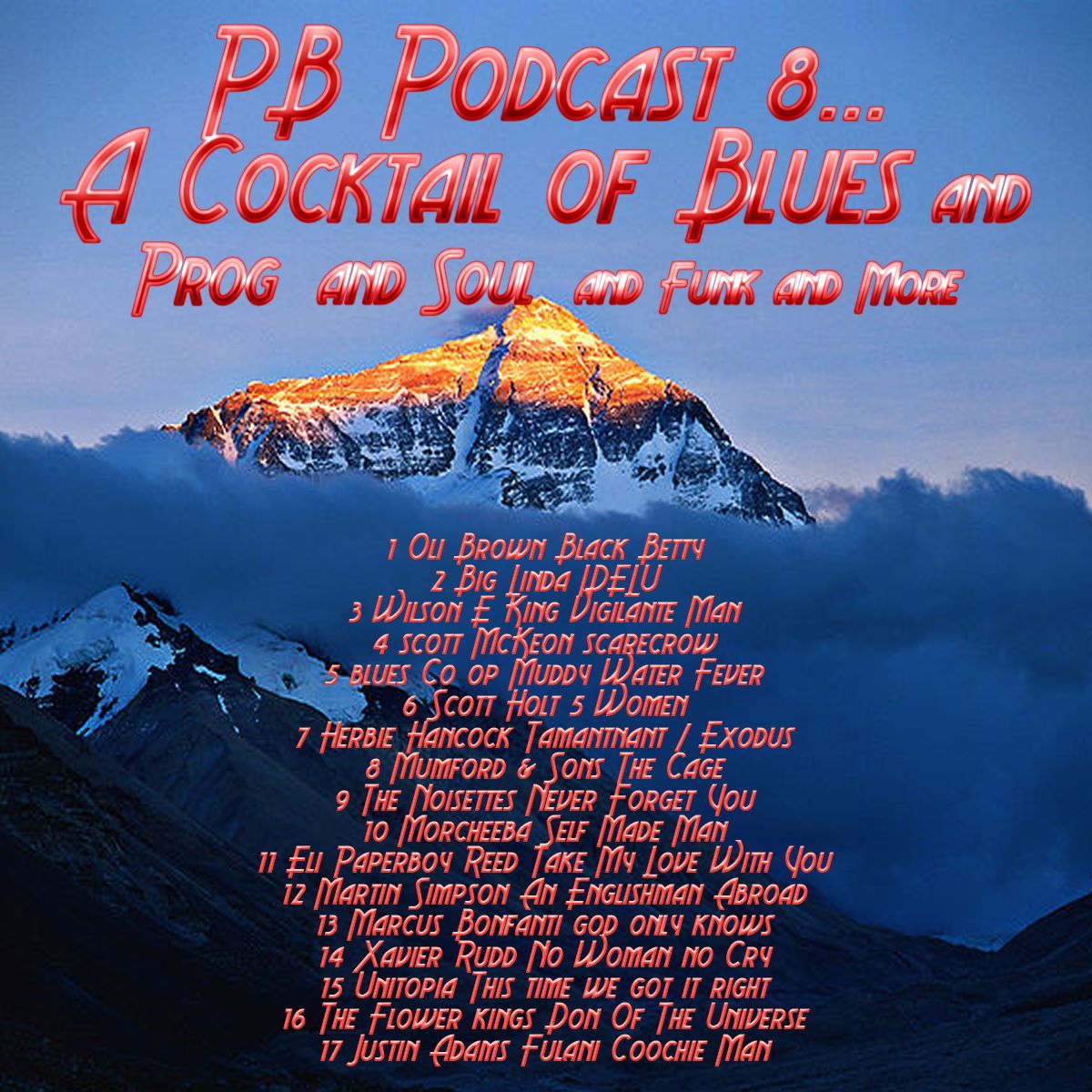
PurpleBlues Podcast #8 - A Cocktail of Blues


A Cocktail of Blues...prog, soul and more


Lock up your Stereo! format your mp3 player, they're back...
another mix of old ,new, borrowed and Blues.

PB podcast 8 is almost her, it's being followed by a Progcast soon, if anyone is interested.
so, as ever, alternative covers that provide a tracklist are here.

the track listing will let Scoop do his internet burrowing and post you tube extracts etc.
Or we could just ignore the track list and let our ears be the judges...


Listen later Here